
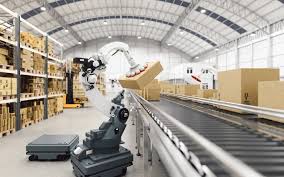
Loading bays changed more in 2025 than most industries acknowledge. Engineers spent years talking about automation, but 2025 is when docks actually began acting automated. Every modern loading system now starts at the point where height correction begins, and that point is always physical. The platform rises because the bay must align before logistics proceeds. This is where dock levelers appear at the beginning of the industrial exchange.
Dock levelers absorb the first movement logic. They bridge the truck bed to the warehouse floor without transferring structural stress. They operate as the first engineered surface that communicates alignment expectations to humans before any supervisor speaks. They tilt, settle, and hold because their role is correction, not resistance. Their motion tells workers that the bay is active, responsive, and impatient for misalignment, not for people. The environment shifts into urgency mode because the infrastructure has already started moving.
The Dock Became a Decision Maker
A facility used to rely on operators pulling ramps into place and guessing truck heights visually. Smart docks removed that guessing step in 2025. Sensors now calculate geometry at scale. The dock interprets truck bed height through real-time surface telemetry. It decides alignment timing without human intervention. Engineers didn’t replace people, they replaced estimation. The dock now carries the first micro-decision load: “align first, load next, repair never.” This shift changed how leaders evaluate dock investments. Protection budgets moved from structural repair lines into replaceable material lines. When the dock deforms, the system absorbs the deformation invoice so the foundation doesn’t inherit it.
Speed Turned into a Psychological Signal
Industrial design saw speed differently in 2025. Fast infrastructure no longer meant faster throughput alone. It meant faster cognitive pressure on workers and drivers. A fast door opening or closing is interpreted by humans as a countdown, not as a convenience. Engineers now treat speed as a psychological signal that shapes urgency. They design protection timing around the reality that humans rush when hardware moves fast. They shorten pauses, speed alignment attempts, and cut decision buffers because the environment sounds urgent. This bias is strongest in logistics spaces where driver visibility lines collapse into instinct during tight turn-ins.
But the real engineering win of 2025 is that speed is now paired with consequence isolation. Engineers design fast systems to keep structural shock out of the building. They route vibration
Barriers Started Protecting Uptime, Not Paint
Barriers in 2025 loading environments are not built to look untouched. They are built to look replaceable. The smarter barrier loses the battle so the expensive infrastructure never fights one. Steel plates bow to absorb kinetic force. Anchor independence prevents shock transfer into the dock’s concrete base. Barriers are designed to deform predictably and then exit the damage conversation quickly. When the barrier absorbs the hit, uptime resumes without public drama.
Warehouse leaders saw fewer catastrophic bay repairs in 2025 not because impacts reduced, but because impact inheritance reduced. The system localizes damage inside the sacrificial component budget, not inside the structural repair budget.
The Door That Shapes the Rush
Warehouse docks always had fast doors, but 2025 is when engineers designed them for human reaction, not just durability. The sectional door sits at the center of the bay as the first psychological trigger. It moves early, opens in segments, and influences workers, drivers, and operators to match its pace. Engineers build these doors to absorb vibration and contain urgency pressure without transferring shock into rails, motors, or foundations. A fast sectional door controls the consequence of rushed alignment, keeping the dock structure uninvolved in downtime. In 2025, doors stopped inheriting loss and started shaping behavior. The perimeter carries impact, the building stays untouched, and operations keep moving.
Uptime Became the Real Cost Center
In 2025, downtime outranked durability as a metric. The costliest loss was not equipment replacement. It was an operational interruption. Warehouse leaders now treat barrier replacement cycles as predictable budgets, not emergencies, because replacing a bent steel plate is always faster and cheaper than repairing a cracked dock foundation or a misaligned bay floor. The dock is engineered to absorb the invoice so finance teams never have to calculate the inherited structural loss later.
When trailers misalign, the correction happens in buffers and rails, not foundations. When doors vibrate under kinetic shock, the door motor and rails hold without inheriting structural failure. When perimeters take hits, the damage expires in replaceable steel posts.
This shift changed how leaders invest. They no longer ask how to make barriers indestructible. They ask how to make barriers replaceable without affecting uptime.
Conclusion
In 2025, warehouse loading systems stopped being a mechanical necessity and became a calculated engineering strategy built around consequence isolation. Engineers now design docks to absorb the impact budget inside replaceable steel, redirect vibration through buffers, and preserve structural foundations from inheriting forces they were never meant to carry. This shift made the dock smarter, quieter, and economically predictable. And when the argument between motion and structure must end, it ends where engineered protection has already accepted the damage contract, at the physical perimeter where bollards stand as the final structural guardians, absorbing impact energy and marking that some barriers are built not to remain unbroken, but to protect what must always remain untouched.